
Key points
- Fiber optic cables last 9–15 months and cost $300–$1,300 each to replace
- Cordless LED systems save 3–5 minutes per case, compounding across annual volume
- Distributors can shift from reactive cable sales to recurring blade revenue
Ambulatory surgery centers (ASCs) face rising costs and flat reimbursements. The 2026 CMS payment update came in at 2.6%, barely keeping pace with inflation. For ASCs performing high volumes of breast, cosmetic, and orthopedic surgery, the path to profitability runs through operational efficiency.
Surgical lighting infrastructure is one of the most persistent drains on ASC budgets. Legacy fiber optic systems carry hidden costs that compound across hundreds of annual cases: cable maintenance, thermal risks, sterilization labor, and workflow delays. For distributors selling into this market, understanding these cost drivers is the difference between a transactional sale and a consultative partnership. This article examines the total cost of ownership for wired vs. cordless illumination systems and quantifies the ROI case for high-volume surgical facilities.
Contents
What are the hidden costs of fiber optic lighting systems?
Fiber optic cables transmit light from external halogen or xenon sources through bundles of glass fibers. These bundles are inherently fragile. Coiling, accidental stepping, and the thermal stress of repeated autoclaving cause individual fibers to fracture over time. Industry data indicates that medical-grade fiber optic cables in high-utilization settings possess a functional lifespan of 9–15 months before light attenuation compromises deep-cavity visualization.
The capital requirements for a traditional wired lighting setup are substantial. External light towers cost between $5,000 and $20,000, depending on whether they use xenon or LED sources. The cables themselves, which function as long-term consumables despite being classified as reusable assets, cost $300–$1,300 each. In a facility running 15 cases per week, the average replacement frequency is 1.2–1.5 cables per tower per year, creating an annual unbudgeted expense of $1,500–$2,000 per surgical suite. Distributors who can quantify these recurring costs position themselves as problem-solvers rather than vendors.
Fiber degradation creates a negative feedback loop. As glass strands fracture, total light output decreases. Surgical teams compensate by increasing source intensity, which accelerates thermal degradation of the cable tip and raises the risk of connector damage or patient burns.
Cordless LED systems operate on a different economic model. The primary reusable component is a light handle designed for a three-year functional lifetime, eliminating the external tower entirely. The consumable portion is a single-use blade that ensures every procedure begins with 100% light transmission efficiency.
How much OR time do wired systems consume?
Operating room time is the most valuable commodity in an ASC. Current estimates place the cost of OR utilization between $60 and $100 per minute, covering labor, facility fees, and fixed overhead. In a high-volume center performing 10–15 procedures weekly, the cumulative impact of setup delays can determine whether the facility adds cases to the daily schedule or falls into deficit.
Wired fiber optic systems impose a measurable workflow penalty. The setup sequence involves positioning the light tower, fetching and inspecting the cable for damage, connecting the cable to both tower and retractor, and managing the cable tail to prevent sterile field compromise or trip hazards.
Comparative time-motion studies of wireless vs. wired surgical equipment (including arthroscopic cameras) have documented setup time reductions of 38–44%. Applied to retractor lighting, the pattern holds: wired systems require tower positioning, cable inspection, connection, and cable management. Cordless systems require only blade attachment. Facilities report time savings of several minutes per case.
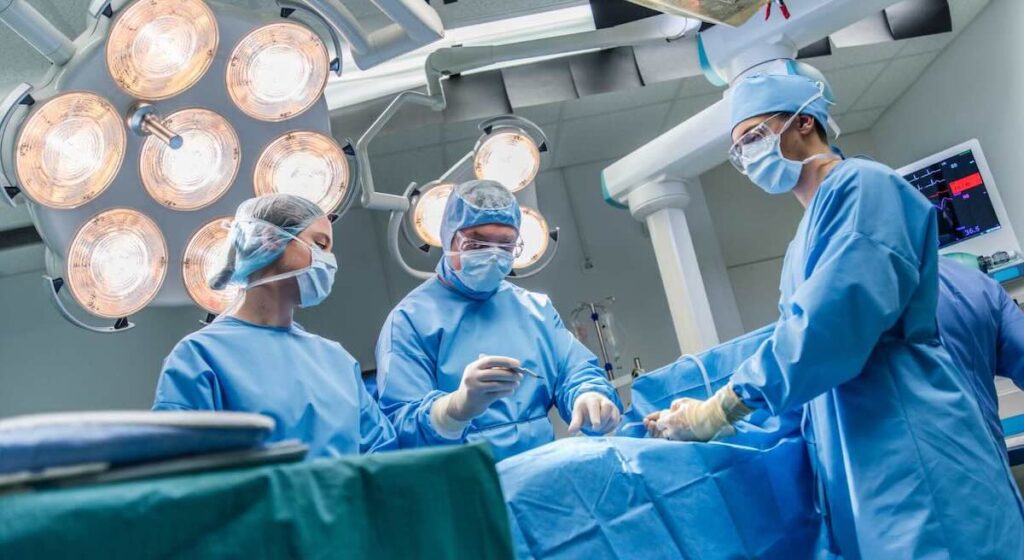
Research on surgical lighting confirms that surgeons adjust overhead lights every 7.5 minutes on average, with 97% of adjustments requiring the surgeon to pause the procedure. Cordless retractor-mounted illumination eliminates these micro-pauses because the light source moves with the retractor, staying focused on the tissue being retracted.
The annual financial impact scales with case volume. Even modest time savings per case compound across hundreds of annual procedures. At $60–$100 per minute of OR time, a facility performing 750 cases per year that saves just 3–5 minutes per case recovers $135,000–$375,000 in capacity value. This recovered time allows for additional surgical procedures without increasing operating hours or staffing costs. Distributors presenting these calculations to value analysis committees speak the language of facility administrators.
What sterilization burden do fiber optic cables create?
Reprocessing fiber optic cables is among the most labor-intensive tasks for a Sterile Processing Department. Cables must be manually cleaned with lint-free cloths to remove debris, then coiled loosely to prevent fiber breakage during storage. The sensitivity of glass fibers to high-heat and high-pressure cycles often requires specialized sterilization protocols.
Ethylene oxide (EtO) sterilization, commonly used for heat-sensitive fiber optic components, involves cycle times exceeding 14 hours due to mandatory aeration phases that remove toxic residuals. Vaporized hydrogen peroxide systems, while faster, have limited penetration for long, coiled lumens. The result is that fiber optic cables become bottlenecks in the reprocessing workflow.
The cost of reprocessing surgical instruments containing fiber optic components averages $96 per tray, driven by technician labor, chemical consumables, and sterilization equipment energy consumption. Annual technician time spent maintaining and troubleshooting fiber optic lighting equipment adds approximately $5,500 per facility.
The long turnaround times force facilities to maintain larger inventories. A center might need 12 sets of fiber optic retractors to sustain a high-volume daily schedule because cables are unavailable for 14 or more hours after each use.
Cordless LED handles rated for IPX7 water resistance can withstand immersion in one meter of water for 30 minutes, allowing them to be processed through automated washing and decontamination systems. These handles are compatible with vaporized hydrogen peroxide sterilization (such as Sterrad systems), which completes in 75–120 minutes with no aeration required. The faster turnaround reduces the total inventory a facility needs to maintain.
Single-use blades remove the most contaminated component, the curved retractor blade that contacts tissue, from the reprocessing workflow entirely. This reduces bioburden on the SPD and simplifies instrument sets.
How do thermal risks translate to liability costs?
The clinical liability associated with legacy fiber optic lighting centers on extreme thermal output. High-intensity xenon and halogen sources transmit light through fiber bundles that act as heat conduits. The distal end of a fiber optic cable can reach temperatures exceeding 200°C (392°F) within minutes of operation. If a cable is accidentally disconnected from the retractor and left resting on a surgical drape or patient skin, a second- or third-degree burn can occur within seconds.
The FDA’s MAUDE database confirms that 33.3% of OR fires are associated with light sources, with 20% specifically linked to fiber optic cables. In procedures like breast augmentation, where the light source operates deep within a narrow pocket in proximity to tissue and drapes, the thermal risk is constant. A single patient burn can lead to a lawsuit with settlement averages in 2026 reaching $250,000–$425,000, with catastrophic or disfigurement cases reaching into the millions.
LED light sources operate on different physics. LEDs convert electrical energy to light with high efficiency and minimal heat generation. Cordless LED retractors maintain maximum operating temperatures around 55°C (131°F), below the threshold for tissue damage and well below the ignition temperature of surgical drapes.
A secondary liability in crowded ASC suites is the trip hazard posed by cables crossing the floor. Operating rooms are high-traffic areas where nurses, anesthetists, and surgical assistants move rapidly. Medical liability insurance premiums have risen for six consecutive years, with many states entering a hard market where premiums increase by more than 10% annually. Risk management departments increasingly favor cordless environments to reduce these hazards.
What should distributors evaluate when sourcing illumination systems?
Medical device distributors serving ASCs should frame illumination equipment in terms of total cost of ownership over a three-year lifecycle rather than acquisition price. The economic comparison between wired and cordless systems extends across maintenance, sterilization labor, OR time consumption, and risk mitigation.
Our post on fiber optic retractor problems details the recurring costs that accumulate with legacy systems: $18,000 or more in initial capital expenditure for a tower and two cables, $4,500 in cable replacements over three years, and over $200,000 in sterilization costs across 2,250 cases. Cordless systems invert this cost structure, with lower initial capital requirements and consumable costs that scale directly with case volume.
The razor-and-blade revenue model offers distributors a more resilient business relationship with facilities. Rather than depending on infrequent tower sales every 5–7 years and reactive cable replacements, distributors can establish recurring revenue through consumable blade bundles linked directly to surgical volume. This alignment benefits both parties: the facility receives consistent illumination quality, and the distributor gains predictable revenue streams.
Surgeon adoption depends on practical factors. Weight matters for handheld instruments used throughout multi-hour procedures. Cordless designs that eliminate cable management free the surgeon to reposition the retractor without pausing to adjust lighting. Transparent blade materials that transmit light directly into the cavity, rather than reflecting it from above, address the shadow and glare complaints documented in surgeon surveys on surgical lighting.
Facilities also need documentation for value analysis committees. Thermal safety profiles, regulatory clearances (FDA registration, EU MDR certification), and compatibility with existing sterilization infrastructure all factor into purchasing decisions. Distributors who can articulate the ROI case with specific data points, rather than general claims, position themselves as partners in operational improvement.
The financial case for cordless illumination
The transition from wired to cordless surgical lighting is not a matter of preference or incremental improvement. The accumulated costs of fiber optic infrastructure, from cable fragility and sterilization bottlenecks to thermal liability and workflow drag, drain hundreds of thousands of dollars from ASC budgets over a three-year equipment cycle. High-volume facilities face this cost multiplied across every surgical suite.
Cordless LED systems address each of these cost centers directly. Solid-state electronics eliminate the fragility of glass fiber bundles. Modular single-use components remove the most contaminated parts from reprocessing workflows. Low operating temperatures eliminate the thermal hazards documented in FDA adverse event reports. The grab-and-go workflow recovers minutes per case that translate to recovered capacity and additional revenue.
Evaluate the koplight™ for your ASC customers
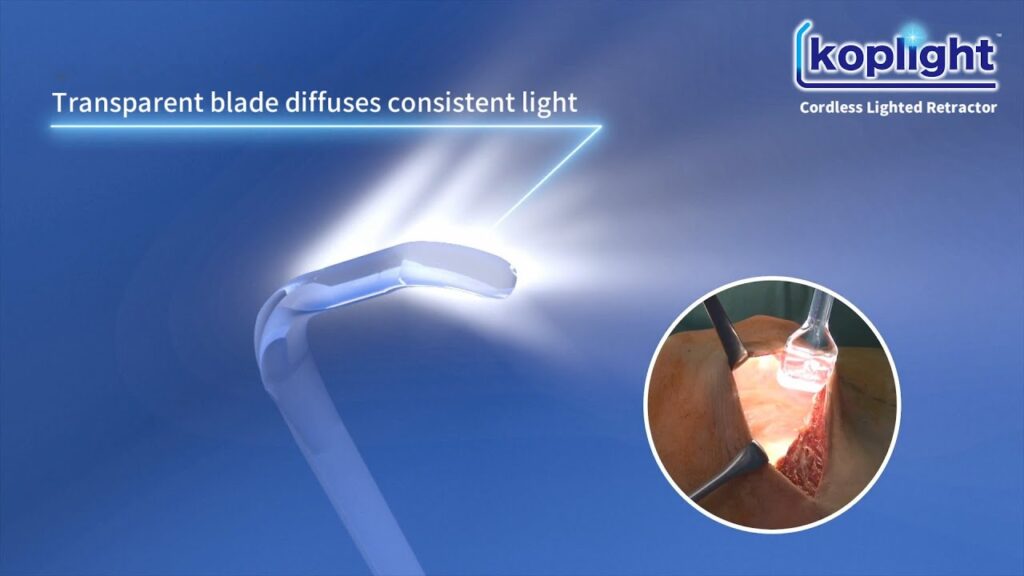
The koplight™ cordless lighted retractor delivers 40,000+ lux illumination through a transparent polycarbonate blade, providing direct in-cavity lighting without cables or external light towers. The LED handle is designed for a three-year service life and is compatible with standard VH2O2 sterilization protocols.
Eight blade sizes accommodate procedures from breast surgery to abdominoplasty. The system is FDA-registered and carries EU MDR certification. Contact Yasui for distributor pricing.
