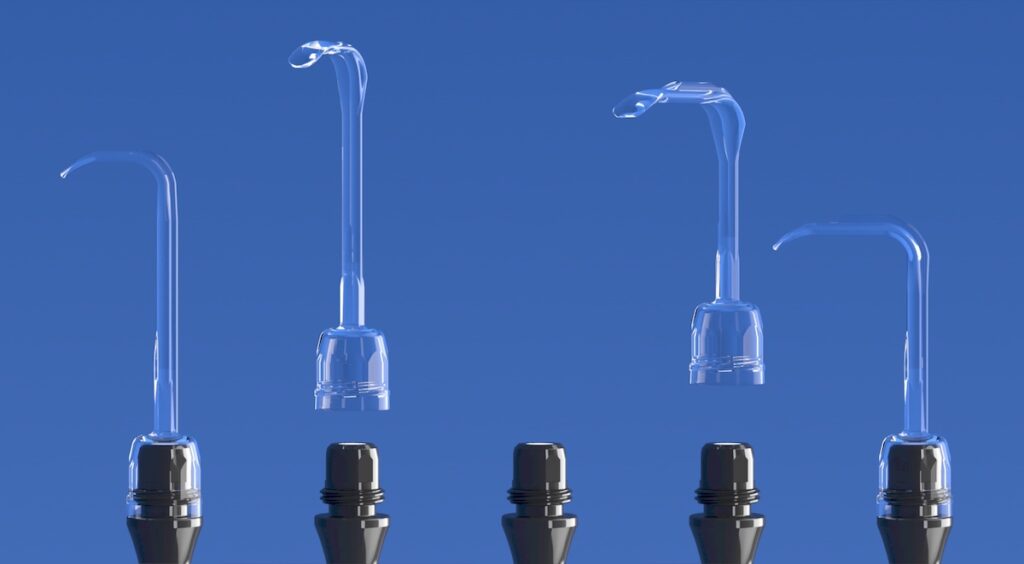
An IPX7 rating means a surgical instrument’s enclosure has passed the IEC 60529 test for temporary immersion in water (PDF) at a depth of 0.15–1 meters for 30 minutes. For a cordless instrument with batteries and an LED inside, the handle can go fully underwater, as it does in a pre-cleaning soak, without water reaching the electronics. The Yasui koplight™ lighted retractor meets this standard, further enhancing its value as a versatile OR tool for surgeons.
That protection is narrower than the word “waterproof” suggests. The rating says nothing about detergents, heat, or sterilization, so a spec sheet that lists IPX7 still has to be read alongside the device’s instructions for use. Once you know what each digit tests and what it leaves out, you can judge a cordless device’s water protection before it reaches the OR.
Contents
What do the numbers in an IP rating mean?
An IP rating is a two-digit code from IEC 60529 that grades how well a device’s enclosure keeps out solids and water. The first digit rates solid objects and dust on a scale of 0 to 6, and the second rates water on a scale of 0 to 9. An “X” in either position means that category wasn’t rated, so IPX7 makes a water claim and no dust claim. That X isn’t a zero: IPX7 and IP07 are different statements, and only the second one says the enclosure has no protection against solid objects.
The letters stand for “ingress protection”, and the standard grades the enclosure: the outer shell, seals, and caps between the water and the parts inside. IEC 60529 is a general standard that each product field applies in its own way. The Yasui koplight™ has an IPX7 rating under IEC 60529 in the safety classifications section of the instructions for use.
For surgical devices, the second digit carries most of the information, and each level tests a different kind of water exposure.
How does IPX7 compare with other water ratings?
IPX7 is the first level that tests full immersion. The ratings below it test dripping, spraying, splashing, and jets of water, and IPX8 tests continuous immersion under conditions agreed for the product. Immersion and jets are separate tests in the standard, so a device rated IPX7 hasn’t necessarily been tested against the jets used for IPX5 or IPX6.
IPX8 also has no single depth or duration, so check the depth and time stated for the product.
| Rating | What the test does | What it tells you about a handheld surgical device |
| IPX4 | Splashes water from any direction with an oscillating tube or spray nozzle | Resists splashing; not tested for immersion |
| IPX5 | Sprays water from a 6.3 mm nozzle | Resists a low-pressure water jet; not tested for immersion |
| IPX6 | Sprays water from a 12.5 mm nozzle | Resists a stronger water jet; not tested for immersion |
| IPX7 | Submerges the enclosure temporarily at 0.15 to 1 m | Protected during temporary full submersion, such as a pre-cleaning soak |
| IPX8 | Submerges the enclosure continuously under agreed conditions | Protected during continuous immersion, at the depth and time stated for the product |
| IP67 | Dust-tight (6) plus temporary immersion (7) | Same water protection as IPX7, with a dust rating added |
| IP68 | Dust-tight (6) plus continuous immersion (8) | Same water protection as IPX8, with a dust rating added |
The second digit tells you whether a device can be submerged, and IPX7 is the first level that tests for it. For a cordless surgical instrument, submersion happens at predictable points in its working day.
What does IPX7 protect a surgical instrument against?
IPX7 protects the electronics inside a sealed instrument when the instrument is fully submerged for a short time. For a cordless lighted retractor, that means the LED, circuit, and battery compartment are protected against harmful water ingress when the handle is underwater.

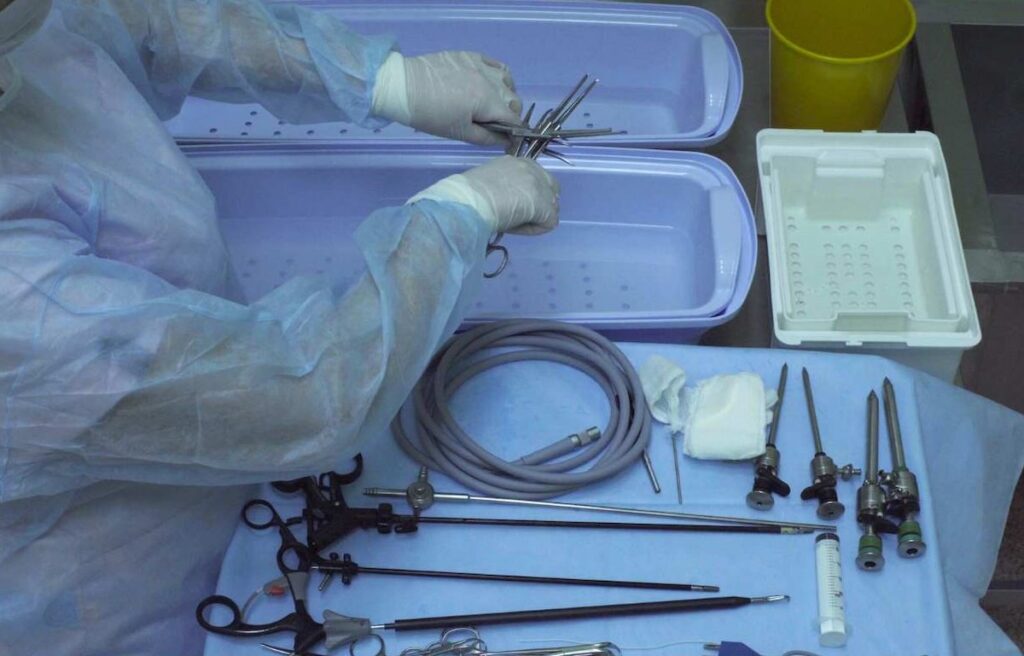
During a case, the handle works close to blood and irrigation fluid. After the case, cleaning puts it underwater on purpose. When using the koplight™, remove the batteries, tighten the tail cap, and start manual pre-cleaning with a 5-minute soak in cold utility water, followed by brushing and rinsing under running water before the handle goes into a washer-disinfector. A sealed, immersion-rated handle goes through that soak in one piece.
The tail cap that closes the battery compartment also comes off with every case. The batteries aren’t sterile, so a circulating nurse loads them through a battery inserter before each case, and staff take them out again before cleaning. The cap comes off and goes back on at least twice per case, and should be firmly tightened each time.
Water protection is a question for cordless designs specifically. A fiber-optic lighted retractor has no electronics in the instrument, because its light travels through a cable from a separate box, so its concerns are cable heat and clutter. Knowing what IPX7 protects also means knowing where that protection stops.
What doesn’t an IPX7 rating tell you?
An IPX7 rating doesn’t tell you whether a device can handle detergents, heat, or sterilization. IEC 60529 excludes corrosion, corrosive solvents, and condensation from its scope and leaves those questions to each product’s own standard. The immersion test uses plain water for a set time, while a reusable surgical instrument faces enzymatic detergents, thermal disinfection, and repeated sterilization over its service life.
Those conditions belong to the manufacturer’s reprocessing instructions, which the FDA expects to be scientifically validated for each reusable device. The koplight™ light handle shows how the two work together. It’s rated IPX7, and an enzymatic neutral detergent wash at 45°C, rinsing with purified water, and thermal disinfection at 80°C–93°C is specified. Hydrogen peroxide and ethylene oxide are valid for sterilizing the handle, but not soaking in alcoholic disinfectants or saline, or ultrasonic cleaning.
An IP test is also run on samples under set conditions, so it can’t show how a seal holds up after years of use. The koplight™ light handle’s lifetime is three years of use and calls for inspection before every use, including checks on the parts that keep water out.
How does the koplight™ light handle keep its IPX7 protection?
The koplight™ light handle keeps water out with a fluorine resin O-ring under a screw-on tail cap, which seals an anodized aluminum body holding two AAA batteries. The handle’s waterproofing is ties to that seal and cap and there’s a short care routine:
- Keep the tail cap firmly tightened during cleaning, including when using an air blower, and keep the inside of the cap dry.
- Clean the battery compartment opening and the inside of the tail cap with a slightly wet cloth, then dry them.
- Check at every inspection that the tail cap tightens firmly, and replace a damaged O-ring, making sure the new one sits undistorted in its groove.
- Use the handle between 15°C and 40°C and store it at room temperature, since the O-ring hardens below 15°C and waterproof performance drops.
- Before sterilization, remove the batteries, tighten the tail cap, and then loosen it one full turn (about 360°), for complete sterilization.
Battery choice ties into the same sealed compartment. Rechargeable NiMH AAA batteries of at least 900 mAh are recommended, fully charged before each use, while lithium cells should be avoided to avoid leakage and overheating.
The O-ring is its own accessory (model KP-1), and our instructions for use (IFU) indicate how to replace a damaged one in five steps. Seal and cap checks fit into the same routine as the rest of surgical lighting maintenance, and skipping the IFU’s steps is one of the common maintenance mistakes sterile processing teams guard against. These details are also what a buyer should ask about before any cordless device goes onto a tray.
What should distributors and surgeons ask about a device’s IP rating?
Ask what the manufacturer has validated beyond the rating itself. An IP code answers one question about water, and a purchasing decision needs several more:
- Which part carries the rating, and was it tested with batteries, caps, and blades in place?
- Does the IFU list the rating among its safety classifications and name IEC 60529?
- Which detergents, soaks, and washer-disinfector cycles does the IFU validate?
- Which sterilization methods are validated for the rated part?
- How is the seal inspected and replaced, and can you order the replacement part?
- What temperature range does the seal need to stay effective in use and storage?
Distributors should bring those answers to the sterile processing team as well as the surgeon, since sterile processing staff are the ones who submerge, wash, and sterilize the device after every case. When two cordless devices both list IPX7, the differences in cleaning, sterilization, and seal care show up in their instructions for use.
A manufacturer that can answer all six from its instructions has documented the reprocessing details that an IP code alone doesn’t show.
Review the koplight™ documentation
Product documentation for the koplight™ is on our documentation page, and the full instructions for use (PDF) include its IPX7 classification and reprocessing steps. Distributors and surgeons can contact us for samples or questions about reprocessing.