
Lighted retractors show up far outside plastic and breast surgery. Any specialty working in a deep or angled cavity runs into the same problem overhead lights can’t solve, which is why the device category turns up in places that have nothing to do with cosmetic surgery.
This article covers:
- where the lighted retractor originated, and why neurosurgery got there first
- how cardiothoracic surgeons use them in vessel harvesting for CABG
- where they show up in oral and maxillofacial, ENT and airway, and general surgery
- the strongest published outcomes evidence, found in orthopedic and spine surgery
- where the evidence is thinnest, in urology and gynecology
Distributors who understand how this market works sell into it; those who don’t keep calling on the wrong people with the wrong pitch.
Contents
Are lighted retractors used in neurosurgery?
Yes, and neurosurgery is where the lighted retractor concept started. A 2014 history published in Neurosurgical Focus credits Temple Fay with developing the first lighted retractor in 1927, though his mentor Charles Frazier had described a version of the device earlier. Frazier wrote in a 1921 issue of Annals of Surgery that the space he worked in during one procedure was “comparable in size to that in the approach to the Gasserian ganglion,” and that his illuminated retractor, already proven useful in Gasserian ganglion surgery, “amply illuminates the field.”
The problem Frazier and Fay were solving hasn’t gone away. A review in The Surgery Journal frames surgical illumination as three competing requirements: light needs to center on the surgeon’s immediate field, deliver high intensity, and penetrate into a cavity or under a flap, and no single method, overhead lighting, a headlight, or a microscope, satisfies all three at once. A study observing 46 hours of surgery found that lighting adjustments happen every 7.5 minutes on average, with 74% made by the surgeon or a resident and 64% interrupting the task at hand. Lighted retractors exist to solve the cavity-penetration piece of that problem, which is why the device Frazier described for one narrow surgical approach ended up useful in specialties that have nothing to do with neurosurgery.
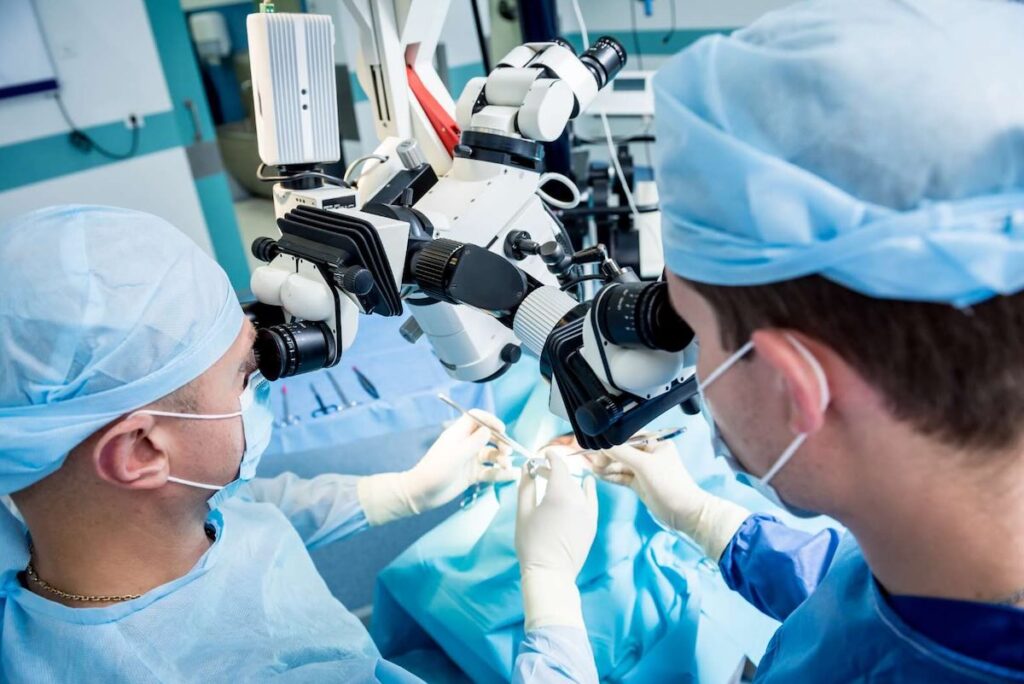
Modern neurosurgery has moved past handheld lighted retractors for most deep dissection, relying instead on specialized self-retaining brain retractor systems and operating microscopes with built-in coaxial illumination. The lighted retractor’s role in neurosurgery today is closer to its historical origin than its current standard of care, but that origin is where the device category as a whole traces back to. We use the koplight™ handheld LED retractor in brain surgery today, alongside oral surgery and thoracic surgery.
Are lighted retractors used in oral and maxillofacial surgery?
Yes, in intraoral and jaw procedures where a headlamp cannot get a clean line of sight into the mouth. A technical note in the Journal of Maxillofacial and Oral Surgery describes a self-retaining cheek retractor used during upper jaw surgery, including Le Fort I osteotomy and alveolar bone graft procedures, specifically because retraction and visualization inside a small, wet, mobile cavity are harder to manage with standard instruments. The Yasui koplight™ has great utility in oral surgery too.
The same access problem that shows up in the mouth reappears in the airway just below it.
Are lighted retractors used in ENT and airway surgery?
Yes, including in tracheotomy, where surgical guides describe adequate lighting as a requirement rather than a preference. For tracheotomy, the retractors most commonly used at the incision site include the Weitlander retractor. A doctor’s recognition of the need for better-lit, more hygienic retractors led directly to the koplight™’s development. The Yasui koplight™ has tracheotomy among its many general surgery applications, detailed here.
Fiber-optic lighted retractors carry a documented burn risk in airway work specifically. A case report in the American Journal of Otolaryngology describes a fiber-optic light source causing a burn during airway surgery, one reason cordless battery-powered designs have gained ground here. The koplight™’s nonconductive plastic and anodized aluminum construction is built for use alongside electric scalpels, with electrical components insulated from tissue and fluids. That same shift toward cordless illumination shows up further down the body, in cardiothoracic surgery.
Are lighted retractors used in cardiothoracic surgery?
Yes, most often in vessel harvesting for coronary artery bypass graft (CABG) surgery and in minimally invasive cardiac procedures performed through small incisions. Devices built specifically for illuminated vessel harvesting exist as their own product category, including US Patent 6,817,978 for a lighted retractor used during radial artery and basilic vein harvesting from the arm, alongside separate patented designs for saphenous vein harvesting from the leg. Minimally invasive cardiac surgery performed through a 4–6 centimeter incision creates the same problem in miniature: without a full sternotomy, direct visualization of the heart and great vessels is limited, which is why illumination at the incision itself matters more than it does in an open-chest approach.
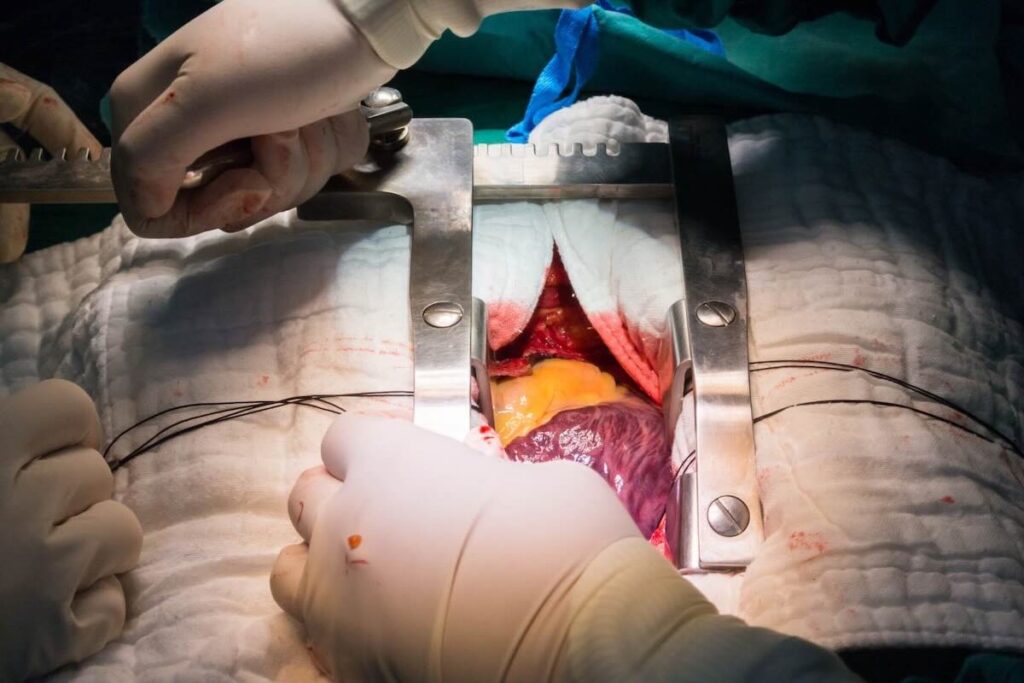
Dr. Tiziano Torre, a cardiothoracic surgeon at Cardiocentro Ticino in Switzerland, uses the koplight™ during radial artery harvesting for coronary artery bypass surgery, saying it helps him visualize the graft and its course through a minimally invasive approach where access is limited. The cordless design eliminates cable burden during procedures that often exceed two hours, and the koplight™’s 40,000+ lux output reaching the graft site directly. The same incision-level illumination problem shows up throughout general surgery as well.
Do general surgeons use lighted retractors?
Yes, in deep abdominal exposure where the surgeon’s own hands and instruments block overhead light once they enter the cavity through the retractor. Deaver-style fiber-optic lighted retractors have been used for deep abdominal and thoracic exposure for decades, applied in procedures like bowel resection and complex hernia repair where the working field sits well below the incision line.
Once an instrument passes through a narrow retractor opening, overhead light no longer reaches the working field behind it, the same geometry problem repeated across procedures. The Yasui koplight™ has general surgery range running from tracheotomy to laparoscopic procedures to musculoskeletal surgery, addressed with eight interchangeable blade sizes rather than a single fixed configuration.
That same geometry shows up again in orthopedic and spine surgery, where the retraction openings are often narrower still.
Do orthopedic and spine surgeons use lighted retractors?
Yes, and spine surgery has the strongest outcomes evidence of any specialty covered here. A 2020 study in the Journal of Clinical Medicine compared thoracolumbar spine exposures using a small-incision retractor system with integrated lighting against standard open exposure, and found patients in the small-incision group had a significantly shorter hospital stay (7 days vs. 13 days) and fewer cardiopulmonary complications.
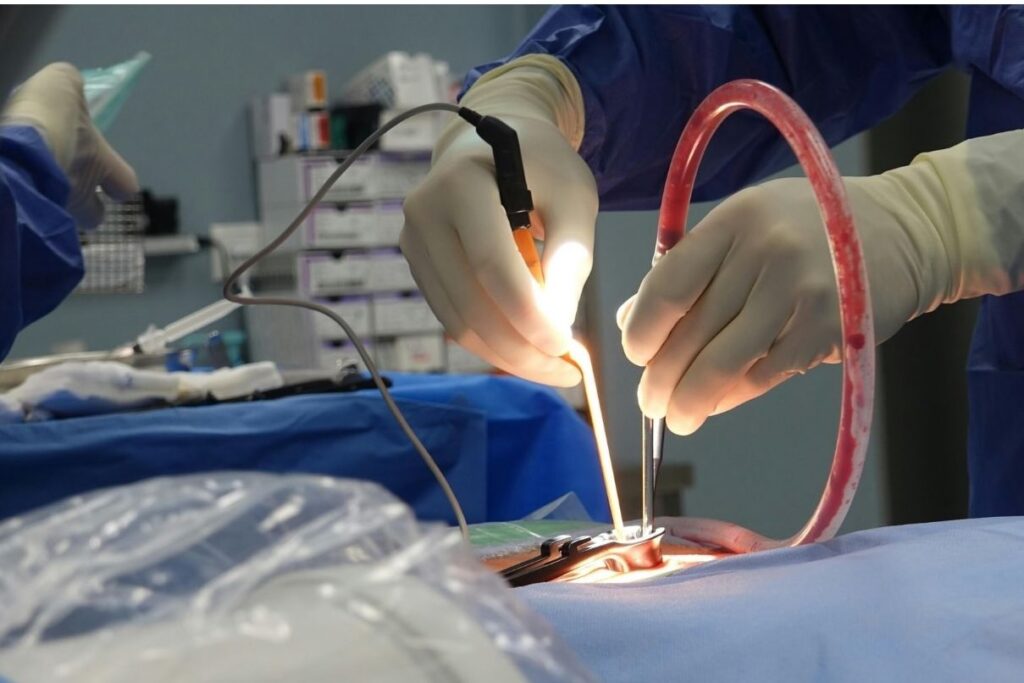
In joint surgery, a technique paper on direct anterior revision total hip arthroplasty describes placing a lighted retractor over the anterior column specifically to get adequate visualization of the acetabulum. The safety trade-off shows up here too. A 2020 case report in the Journal of Surgical Case Reports describes a full-thickness thermal burn in a 23-year-old patient after arthroscopic meniscectomy, with testing showing the fiber-optic light cable involved reached 101°C and could cause a burn within seconds. Cases like this are part of why orthopedic surgeons have moved toward cordless LED designs. We use the koplight™ in musculoskeletal surgery, detailed here and in our lighted retractor overview, which also covers orthopedic surgery as a field where lighted retractors are widely used. The same narrow, deep-access problem exists further down the body too, in urology and gynecology.
Are lighted retractors used in urology and gynecology?
Yes, though the evidence here is thinner than in orthopedics or neurosurgery, drawn mostly from device patents and individual case reports rather than comparative studies. A case report describes needing supplemental LED lighting to visualize the prostatic apex during radical retropubic prostatectomy in a narrow pelvis, where the working space is deep, steep, and hard to reach with a standard overhead light. A dedicated device category for illuminated deep pelvic retractors covers prostatectomy, abdominoperineal resection, and vaginal vault reconstruction, and lighted lateral vaginal retractors exist as their own marketed device class for open gynecologic procedures.
Urology and gynecology have weaker evidence than orthopedics or neurosurgery: the case for lighted retractors here rests more on documented clinical need than on measured outcomes. We don’t currently use the koplight™ in this area, making it the clearest open territory among the specialties covered here.
We’ve covered several of these applications in more depth elsewhere on the blog, including shadow reduction in surgical lighting and the history of lighted surgical retractors, both worth a look if one of these specialties applies to your own practice or distribution line. The koplight™ was conceived by a plastic and reconstructive surgeon responding to his own need for better-lit, more hygienic retractors, which is part of why it has found use well outside the specialty it started in.
Bring the koplight™ into new specialty accounts
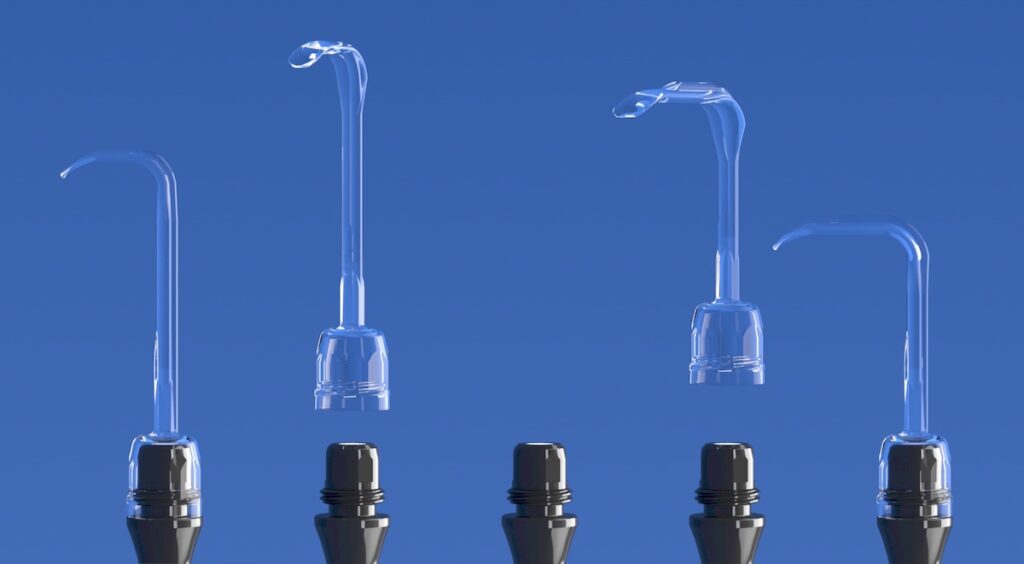
The koplight™ is a cordless LED lighted retractor used across several of the specialties covered here, including cardiothoracic vessel harvesting, breast surgery, and general surgery. Distributors working accounts outside plastic and cosmetic surgery can contact us to discuss samples or distribution.
