

Buyers and distributors evaluating lighted retractors for plastic surgery often compare them on brightness alone. That’s the wrong test: narrow incisions, deep operative fields, and the surgeon’s own hands routinely block overhead light, and lighted retractors solve that problem through several distinct product designs, not one interchangeable tool.
Which architecture fits a given case, cordless or tethered, shapes everything downstream: how illumination and heat actually perform, how the instrument handles, which blades are available, and what the system costs to own past the sticker price. Distributors carry their own layer of regulatory and portfolio questions before any of those numbers compare fairly. A checklist pulls it together, closing with where cordless systems, including the koplight™, fit best.
Getting the architecture right before comparing specifications saves both a distributor’s sales cycle and a facility’s procurement budget.
Contents
What types of lighted retractors are available for plastic surgery?
Lighted retractors generally fall into three designs:
- Fiber-optic retractors connect through a cable to an external light source, typically shared with other endoscopic equipment
- Fully disposable cordless retractors house a battery and light source inside a single-use device discarded after the case
- Cordless reusable-handle systems pair a reusable, battery-powered light handle with a sterile, single-use blade
For a broader introduction to how these devices work as a category, see our overview of lighted surgical retractors.
Each design shifts the ownership burden somewhere different: fiber-optic systems depend on cable and connector compatibility with an existing light source, fully disposable systems eliminate reprocessing but consume a complete device every case, and reusable-handle systems split the cost between a capital instrument and a recurring disposable. In plastic surgery specifically, which architecture makes sense often depends on the procedure: breast reconstruction and body contouring cases can involve long subcutaneous tunnels or deep pockets, while facial and revision procedures work through much smaller openings, so blade and cable length need to match that range rather than a single default size.
Published plastic surgery literature documents illuminated retractors’ use for direct visualization through limited access, though a widely cited paper on the technique predates today’s commercial product lines and offers no head-to-head comparison data. None of the three architectures is broadly better than the others, which is why illumination and thermal performance deserve their own evaluation before weight or price enter the comparison.
What do illumination and thermal performance data actually tell you for plastic surgery?
Illumination specifications only mean something when the measurement conditions behind them are known: a lux figure measured close to a small output point can’t be compared honestly with a lower figure measured farther away across a wider field. A meaningful comparison needs five values together: lux, measurement distance, illuminated area, color temperature, and CRI. Color rendering carries particular weight in plastic surgery, where surgeons rely on accurate tissue color to judge flap perfusion and skin viability, not just to see the field.
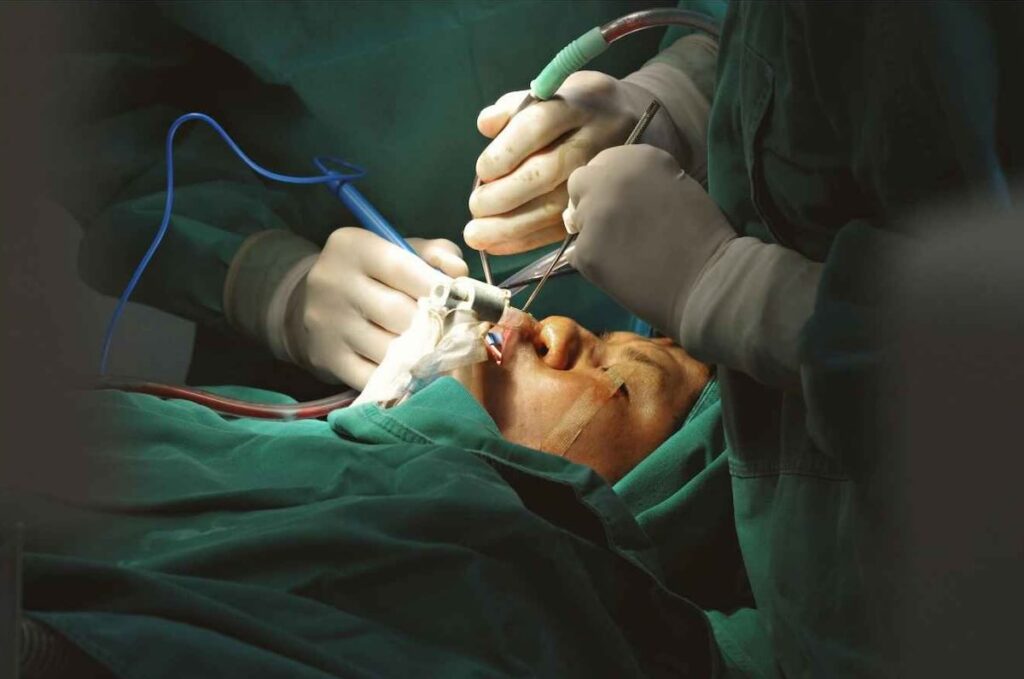
Manufacturers vary widely in what they publish; some state a quantitative lux range on their product pages, while others describe brightness only in qualitative terms like “bright” or “shadowless.” Shadow casting specifically, and why in-cavity lighting reduces it compared with an overhead source, is covered in more depth in our article on shadow reduction in surgical lighting.
Heat is a system-integration question, not simply LED compared with fiber-optic. The FDA’s Manufacturer and User Facility Device Experience database has recorded thermal injury reports tied to damaged, contaminated, or mismatched fiber-optic connections, including cases where the wrong cable diameter was used. That doesn’t establish a failure rate, but it does mean connector and cable compatibility belong in a purchasing specification, not just staff training afterward. Weight and grip matter just as much once illumination and heat are accounted for.
What ergonomic factors affect operating room setup during cosmetic and plastic surgery?
Assembled weight is harder to compare than it should be, since many manufacturers publish handle weight without the blade, battery, or cable adapter attached during use. A working-mass request should specify the exact configuration, not a headline number.
Grip and maneuverability differ by design too: a cable-free instrument moves differently in the hand than a similarly weighted retractor tethered to a cable, since the cable itself adds drag and torque that doesn’t show up in published weight figures. Facility setup follows directly from architecture, since fiber-optic systems need compatible light sources and storage while cordless systems need a battery charging and replacement workflow instead.
Cosmetic surgery performed in an office-based suite adds a further variable, since smaller teams and back-to-back cases make setup and turnover time matter as much as in-case comfort. Neither architecture is automatically simpler, and the blade itself is usually the bigger variable across a case mix.
How do blade design and component models differ across retractor systems?
Blade selection varies by length, width, and profile across manufacturers, and a facility’s case mix typically requires more than one size regardless of which system is chosen. That variety matters in plastic surgery particularly, since a single practice might use the same retractor line across breast augmentation, abdominoplasty, and facial procedures, each calling for a different blade footprint. Blade material affects more than appearance: transparent plastic blades transmit light through the material itself, while metal blades typically pair with a separate illumination path along the retractor. Rigidity, conductivity, and radiolucency, whether the blade shows up on imaging, all vary by material and should be confirmed for the specific blade rather than assumed from material class.
The reprocessing model differs by design too. Some systems use a fully reusable retractor requiring validated cleaning and sterilization; others are fully disposable, with reuse or resterilization prohibited. Reusable-handle systems split the difference: the handle goes through standard reprocessing while the blade is a sterile single-use component. Each model creates a different inventory picture, which is exactly the kind of detail a distributor needs to verify before committing to a line.
What should distributors evaluate before representing a product?
Regulatory status needs precision, not a general brand claim. The FDA is explicit that establishment registration and device listing do not denote approval, clearance, or authorization. Distributors should confirm the exact product code, classification, and 510(k) status for each SKU, plus current CE or EU MDR documentation. The FDA’s AccessGUDID database lets distributors verify a device’s UDI and listing status directly rather than relying on a manufacturer’s summary.
Beyond regulatory documentation, an evaluation should cover training and demonstration support, replenishment lead times for disposables, warranty terms, and how well the product fits an existing plastic and breast surgery portfolio. For a closer look at retractor use specifically in breast surgery, see our breast surgery retractor guide. Distributors serving cosmetic surgery practices, particularly smaller office-based operations, should weigh portfolio fit carefully: one line covering most of a practice’s caseload is often worth more to that account than a lower unit price on a single product. All of it feeds into the number that matters most, the total cost of ownership.
How do you calculate the total cost of a lighted retractor?
Comparing unit price alone obscures the largest cost differences between architectures. A full total-cost comparison should include purchase price, any external light source and cable the system depends on, recurring disposables, sterilization and reprocessing, battery replacement, and the cost of carrying inventory and downtime when a component is out of stock.

A facility that already owns a compatible light source may find an external-source system cheaper to adopt than the sticker price suggests, while a facility without that infrastructure may find a cordless system’s simpler setup worth a different comparison. No savings claim should be accepted without verified data behind it, which is what the checklist below is built to extract.
What questions should buyers and distributors ask before purchasing retractors for plastic surgery?
Before selecting or representing a lighted retractor, ask the manufacturer for the following:
- Illumination data: lux, measurement distance, illuminated area, color temperature, and CRI, using the same protocol across every product
- Maximum measured surface temperature at the blade, connector, and light source under defined conditions
- Working weight in the exact configuration used during a case, not handle-only weight
- Full cable, connector, and light-source compatibility requirements for tethered systems
- Available blade lengths, widths, and materials, and whether blades are reusable, single-use, or hybrid
- Validated sterilization and reprocessing parameters for any reusable component
- Battery chemistry, runtime, and recharge cycle for cordless systems
- Exact regulatory status by SKU, including product code, classification, and market-specific CE or EU MDR documentation
- Training, demonstration, warranty, and replacement-component support offered to distributors
Cordless systems answer several of these questions differently than tethered systems do.
Where do cordless lighted retractors fit best?
Cordless systems offer a practical advantage in facilities that don’t already own compatible fiber-optic light sources and cables, since they remove the need to match an existing lighting ecosystem. That advantage shifts ownership toward battery management and disposable blade supply instead of cable and connector compatibility. Facilities with fiber-optic infrastructure already in place may find an external-source system integrates more easily into existing workflows. Neither approach is right for every operating room, which is why the checklist above matters more than an architecture preference.
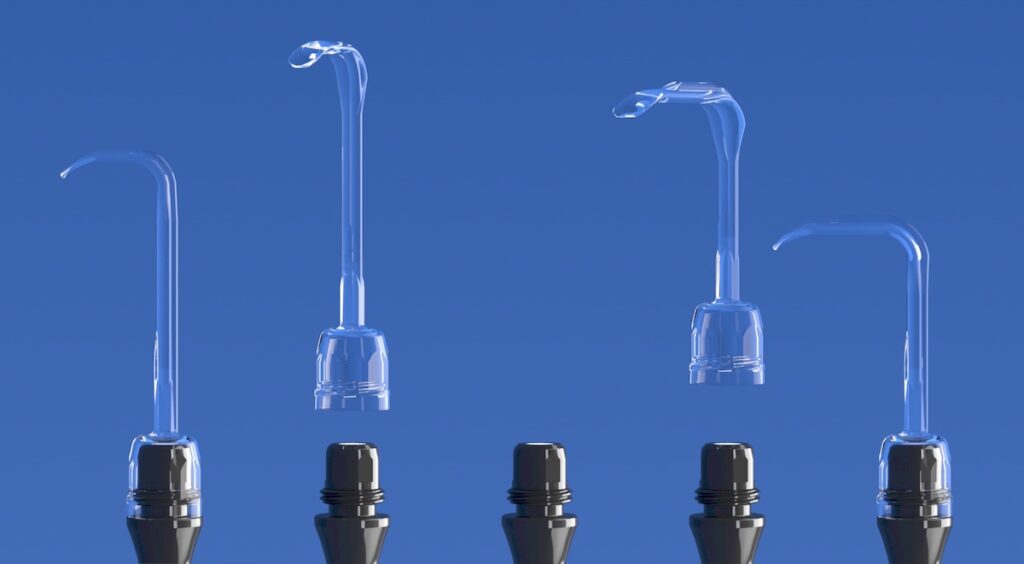
The koplight™ is one example of the cordless, reusable-handle category described above. It pairs a reusable LED light handle, powered by rechargeable AAA nickel-metal-hydride batteries, with a sterile, single-use, transparent polycarbonate blade available in multiple widths and lengths. It has an illumination range of 40,000 to 160,000 lux, roughly two hours of battery runtime per charge, and a configured weight of about 100 to 150 grams depending on blade selection, with full specifications and validated reprocessing parameters documented in the koplight™ instructions for use.
Buyers who want full specifications and blade options can visit the koplight™ product page.
Distributors interested in representing the koplight™ can contact us to discuss availability and support.
