
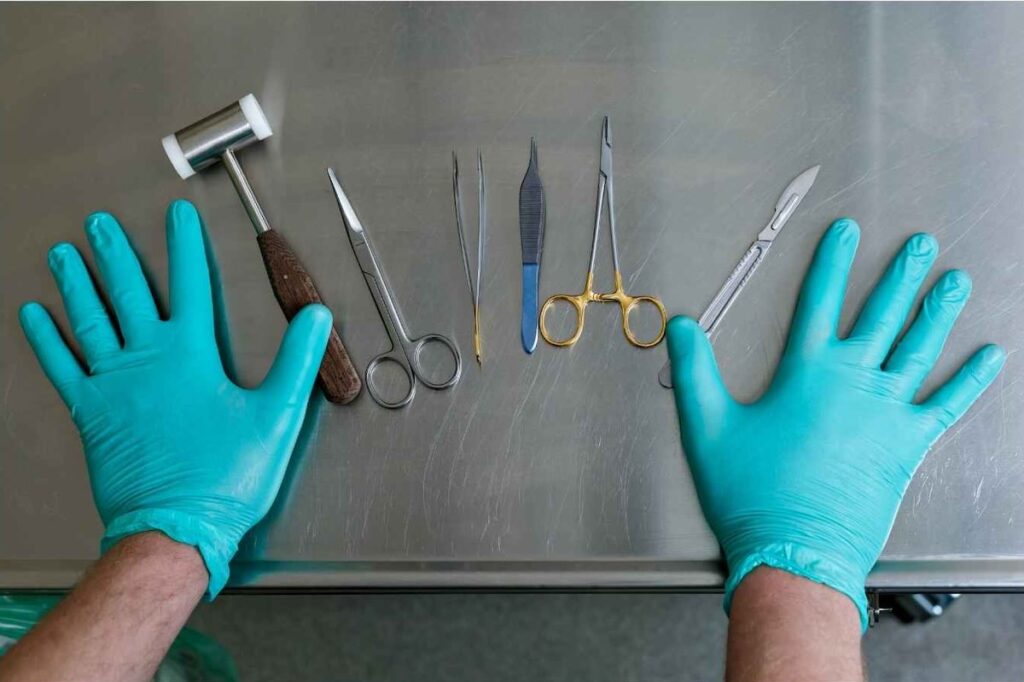
Surgical instruments for plastic surgery span the same categories as any general surgery tray – cutting, grasping, suturing, and retracting. But nearly all instruments and types are finer, smaller-tipped versions built for thin skin where any resulting scars stay visible. The tray’s contents tend to be assumed rather than explained.
Cutting, grasping, and suturing instruments all have the same offsets in plastic surgery – less bulk and grip force for finer control near skin, fascia, and small vessels, ranging from eyelid work to body contouring. Retraction and lighting follow that same logic, a topic we’ve already covered here quite a lot.
This post shows the main contents of a surgical tray for plastic surgery and where lighted retractors can be a big help both for line of sight and for more precise, safer cosmetic and essential work.
Contents
What cutting and dissecting instruments are used in plastic surgery?
Cutting instruments in plastic and cosmetic surgery split into two decisions: what does the cutting, and what controls the bleeding it causes.
What scalpels and scissors are used for cutting and dissection in plastic surgery?
A #15 or #15c scalpel blade handles most skin incisions in plastic surgery. Its short, curved cutting edge is suited to fine, controlled strokes rather than the longer, straight-line cuts a #10 blade makes in general surgery.
The #15c trims that blade down further. It’s useful in especially tight spaces, such as around the nose or ear. Scalpel handles themselves are divided as most of the tray; either a reusable metal handle paired with a snap-on blade or an all-in-one disposable unit that skips reprocessing. Our overview of plastic surgical devices explains how scalpel blade materials, including plastic-handled and disposable options, affect cost and handling.
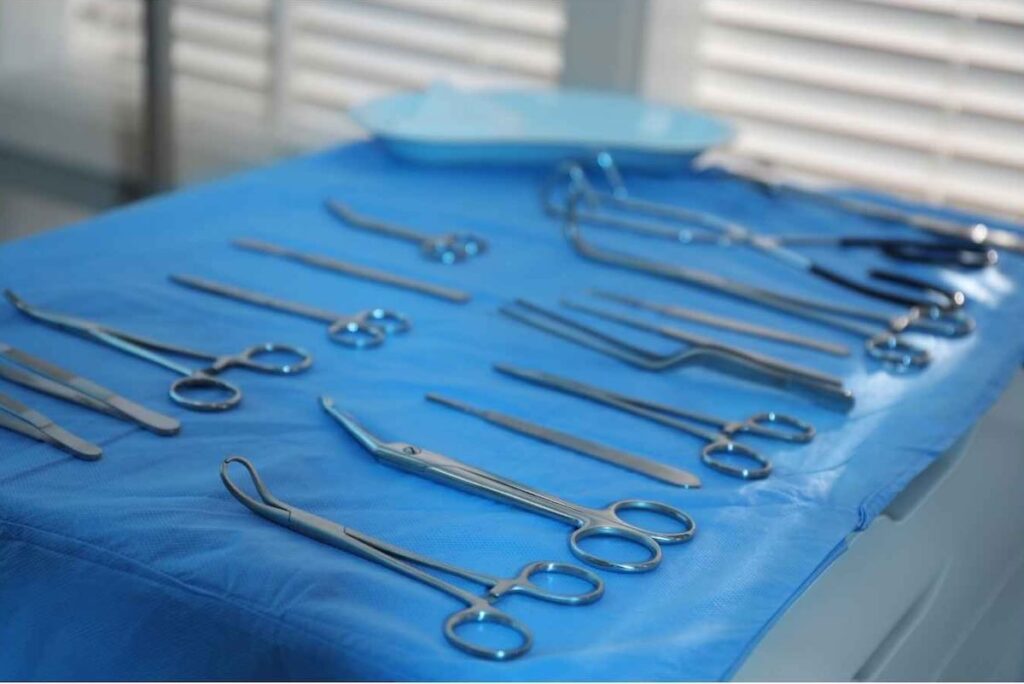
Dissection typically uses slender Metzenbaum scissors for undermining skin flaps and separating soft tissue planes, and Iris scissors, which are shorter and finer-tipped, for the smallest work around the eyelid, nose, or ear. Plastic surgery instruments generally run shorter than general or neurosurgical sets so they canfit the hand and the smaller working field, and blade-tip size, not instrument length, determines how delicate the scissors can cut.
How does hemostasis affect instrument choice?
Hemostasis during dissection usually comes from monopolar or bipolar electrocautery. This is a choice that carries the most risk in flap-based procedures. Electrocautery can produce thermal spread of 3–5 mm into surrounding tissue, and in breast surgery specifically, that spread has been linked to a higher risk of flap necrosis, wound infection, and delayed lymphatic drainage. Bipolar devices concentrate that heat between two tips rather than routing current through the patient, which is part of why many plastic surgeons default to bipolar near thin skin flaps.
Blade construction alos varies. Standard stainless steel has an edge for routine use, while tungsten carbide inserts at the cutting edge are built to hold that edge through many more sterilization cycles. Once tissue is cut and hemostasis is controlled, the next instrument decision is how it gets held out of the way.
What grasping and tissue-handling instruments are used in plastic surgery?
Grasping instruments vary by grip style. Toothed forceps that concentrate pressure at a point and non-toothed options built to totally avoid concentrated pressure.
What forceps are used for tissue handling in plastic surgery?
Surgeons choose forceps in plastic surgery by how much a tooth pattern can grip without crushing what it holds. Standard Adson forceps, with a single interlocking tooth at the tip, hold skin securely during closure but concentrate pressure at one small point.
Adson–Brown forceps spread that same grip across multiple fine teeth instead of one, distributing pressure over a wider surface and reducing the crush injury a single-tooth grip might cause. Adson–Brown, not standard Adson, tends to be the default for skin edges and flap margins because of that wider distribution.
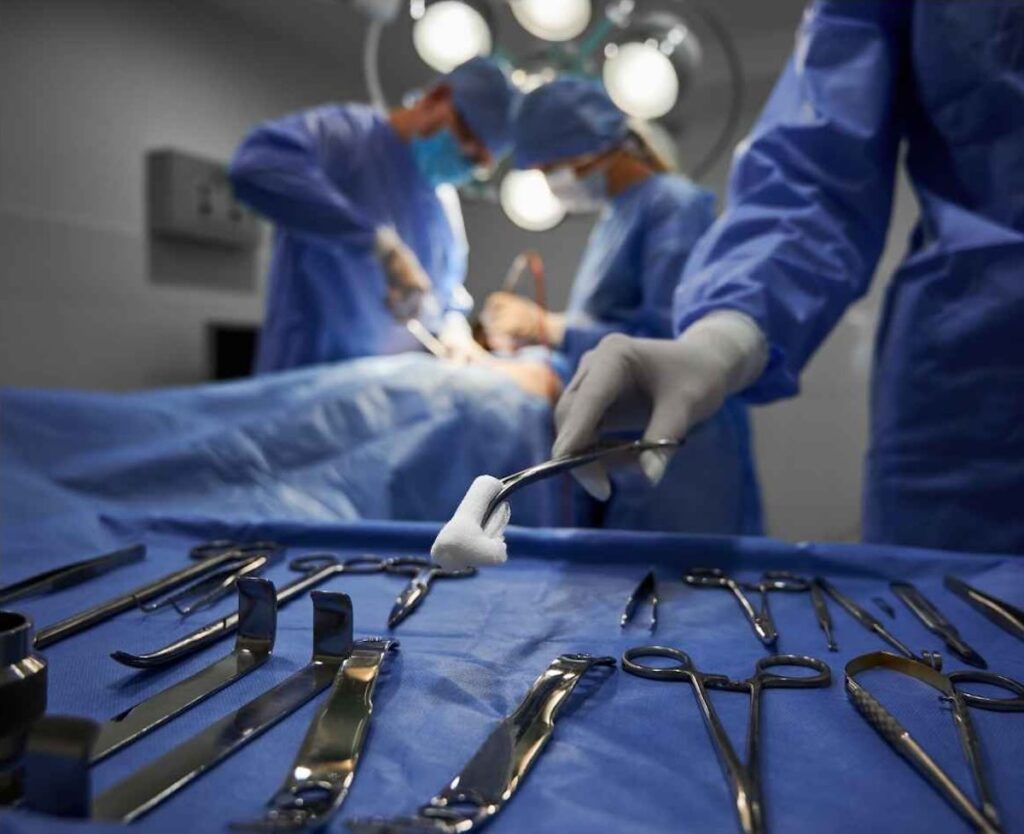
DeBakey forceps, with parallel serrations rather than teeth, go a step further for atraumatic handling of vessels and fascia, and their non-toothed design is common enough across general surgery that many plastic surgery trays borrow the same instrument rather than stocking a separate atraumatic forceps.
What non-toothed options are used for delicate tissue?
Skin hooks, single- or double-pronged, retract a wound edge by its dermis rather than grasping it, avoiding pinching contact altogether. Facial and other cosmetically sensitive incisions favor them for exactly that reason. Bishop-Harmon forceps take that same non-crushing approach further: fine, non-locking, with a lineage in ophthalmic surgery, they show up in plastic surgery wherever periorbital or other delicate tissue needs handling without a toothed grip at all.
Our broader look at specialized surgical instruments examines how grasping-instrument design has evolved across specialties. Suturing instruments face the same crush vs. control tradeoff, just applied to the needle rather than the tissue.
What suturing and closure instruments are used in plastic surgery?
Would closure ranges from the needle holder to whatever else gets the edges to stay together – scissors, staplers, or a combination tool.
What needle holders are used for closure in plastic surgery?
The Webster and Castroviejo are the most common choices for needle holders choice in plastic surgery. The Webster is short, with narrow jaws good for fine suture work in small or deep areas, and it’s held like a standard needle holder, in the palm.
The Castroviejo has no finger rings. It’s a spring-locked instrument held like forceps and released with a second squeeze, built for extremely delicate closures such as eyelid surgery. A comparison from a plastic and reconstructive surgery department found the two instruments load different forearm muscle groups during fine skin suturing, wrist supination for the Webster vs. finger twisting for the Castroviejo or a pen-style holder. That difference is partly why surgeons often have strong personal preferences for one over the other.
What other closure instruments round out the tray?
Finer needle holders are paired with finer sutures. A Webster or Castroviejo suits 5-0 suture and finer, which are common in facial and periorbital closures, while a heavier holder handles thicker suture on the trunk or scalp.
Suture removal needs its own dedicated scissors rather than the dissecting scissors already on the tray; cutting suture with Metzenbaum or Iris scissors dulls an edge meant for tissue, not thread. Some trays substitute an Olsen–Hegar instrument for that pairing, combining needle holder and suture scissors in one tool to cut down on how many instruments a scrub tech needs to track and hand off during closure.
For larger closures, skin staplers are a faster alternative to sutures: donor-site closure using absorbable staples in DIEP flap breast reconstruction has been shown to cut closure time while scoring better on blinded scar assessment than standard suturing, though fine facial work still favors suture over staples for the same reason skin hooks favor a wound edge over a firm grip.
Reusable or single-use is a separate decision for needle holders and for scissors. Our article on disposable surgical instruments weighs that tradeoff. None of these instruments do much good if the field itself isn’t held open and lit well enough to work in.
Where do retraction and lighting belong on a plastic surgery tray?
Retraction and lighting solve the same problem in terms of holding tissue out of the way and making sure the surgeon can see what’s underneath.
Why does plastic surgery need in-cavity lighting?
Our articles on retractors used in breast surgery and on what a lighted surgical retractor is go into retractor specifics. Plastic surgery’s small incisions and deep pockets often need light brought into the cavity itself rather than relying on an overhead fixture. Lighted retractors solve that with a shadow-reduction benefit standard instruments don’t have.
Where does a cordless option like the koplight™ fit?
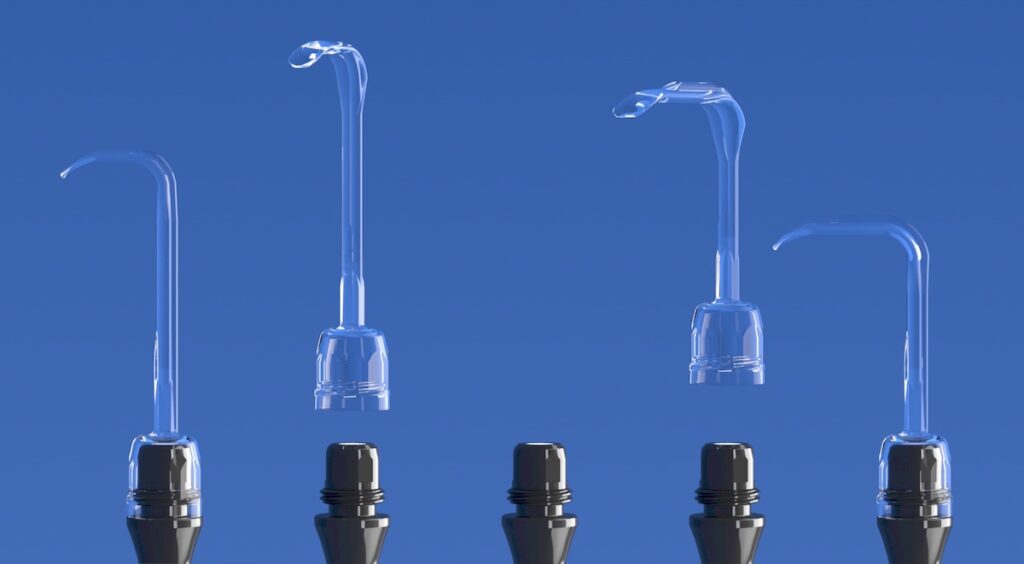
The koplight™, our cordless, illuminating retractor, pairs a reusable LED handle with a disposable transparent blade available in various width. This made in Japan innovation is used for a range of plastic surgery procedures and is especially popular for breast procedures. That range of blades is especially useful because the same set of instruments might move from a deep breast pocket to a shallow facial plane in a single week.
Blade variety within a single product line is more important here than in a narrower specialty. Surgeons and distributors weighing it against a fiber-optic alternative can read our rundown of the problems with fiber-optic lighted retractors before deciding. Full specifications for the koplight™ are available here.
Every instrument on this list, reusable or disposable, eventually comes down to how well it’s cleaned and cared for between cases, and a tray built from several different manufacturers and materials makes that harder to standardize than it looks.
Instrument sets assembled from multiple vendors over the years often mix stainless steel grades and coating types, and that’s usually where sterilization compatibility questions surface first.
Quick reference: What every tray should include
| Category | Instrument | What it’s for |
| Cutting | #15 or #15c scalpel | Fine, curved skin incisions |
| Metzenbaum scissors | Undermining flaps, soft tissue dissection | |
| Iris scissors | Fine work around the eyelid, nose, or ear | |
| Monopolar or bipolar electrocautery | Hemostasis during dissection | |
| Grasping | Adson forceps | Securing skin during closure |
| Adson–Brown forceps | Atraumatic handling of skin edges and flap margins | |
| DeBakey forceps | Atraumatic handling of vessels and fascia | |
| Skin hooks | Non-crushing retraction of a wound edge | |
| Bishop–Harmon forceps | Delicate periorbital tissue handling | |
| Suturing | Webster needle holder | Fine suture work in small or deep areas |
| Castroviejo needle holder | Extremely delicate closures, such as eyelid surgery | |
| Olsen–Hegar instrument | Combined needle holder and suture scissors | |
| Skin stapler | Faster closure for larger incisions | |
| Retraction and lighting | Lighted retractor, including the koplight™ | In-cavity illumination for small, deep fields |
Find lighted retraction instruments for your plastic surgery tray
The koplight™ is a cordless LED lighted retractor used in breast reconstruction and other plastic surgery procedures. Surgeons and distributors can contact us to request samples or discuss availability in the United States, Europe, and other locations.
